Organized by the ERC-research project 'RegInfra and InfraLives projects' (KU Leuven, Belgium)
Date: May 18-21, 2026
Organizers: Wangzhi Xi, Hilde De Weerdt, Dawn Zhuang
Location: Leuven, Belgium
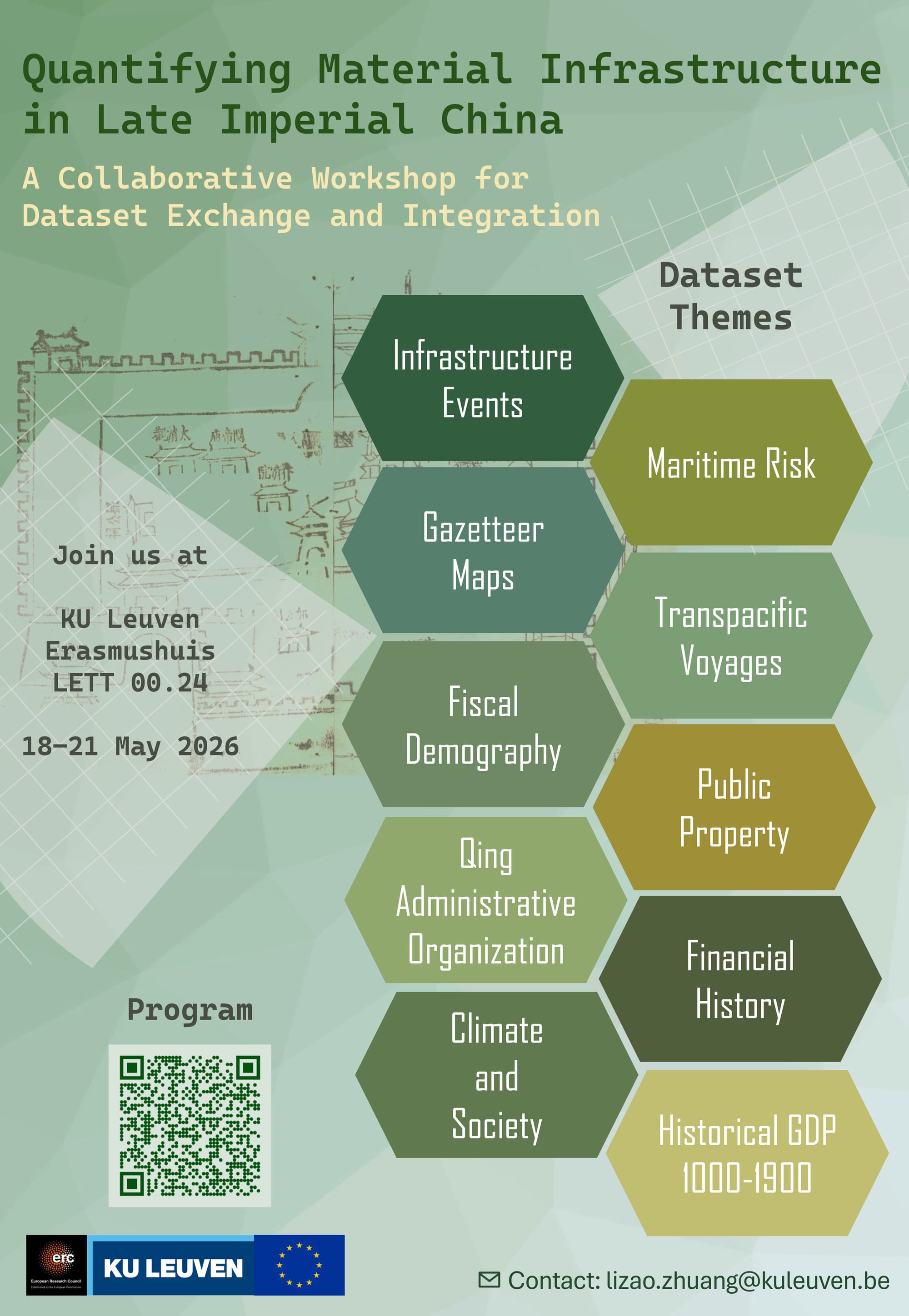
The collaborative workshop "Quantifying Material Infrastructure in Late Imperial China," organized by the ERC project Regionalizing Infrastructures in Chinese History, was held at the Erasmushuis in Leuven from May 18 to 21, 2026. Bringing together experts in economic history, historical databases, and historical geography, the workshop aimed at dataset exchange and integration.
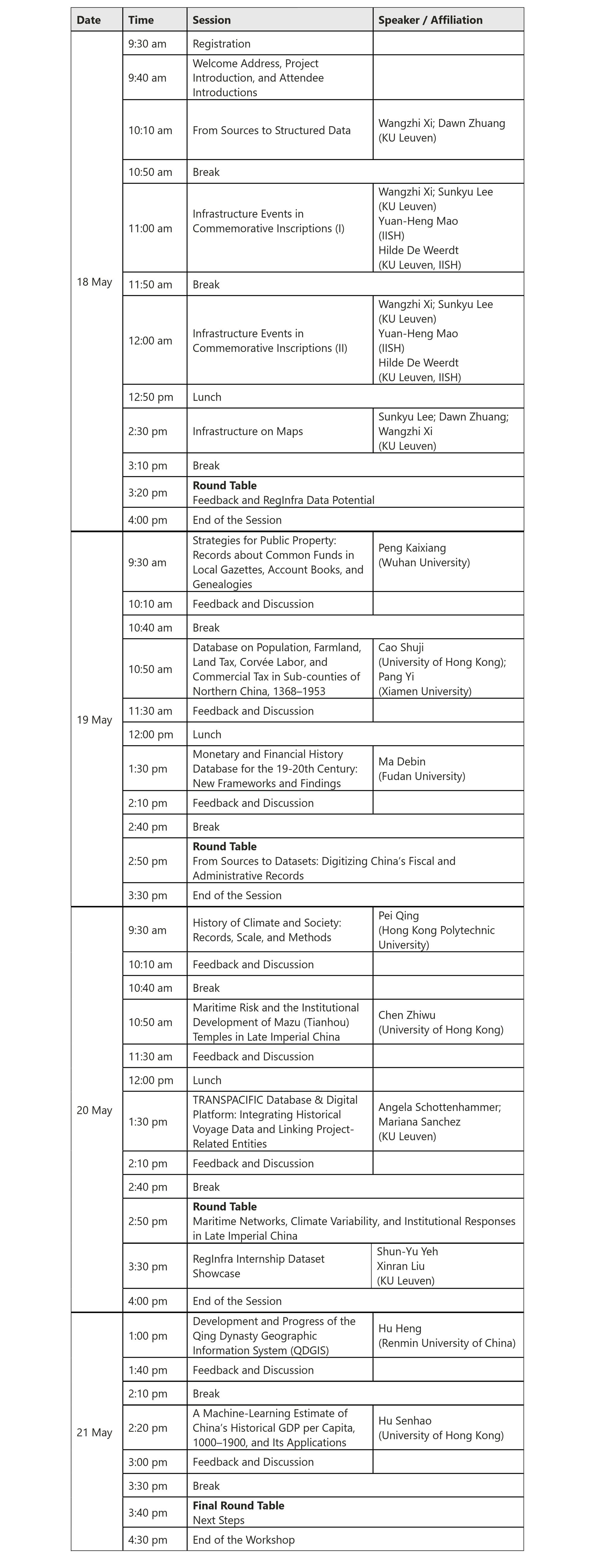
Over four days, the workshop combined presentations, feedback sessions, and moderated discussions on how material infrastructure can be studied through structured data drawn from heterogeneous historical sources.
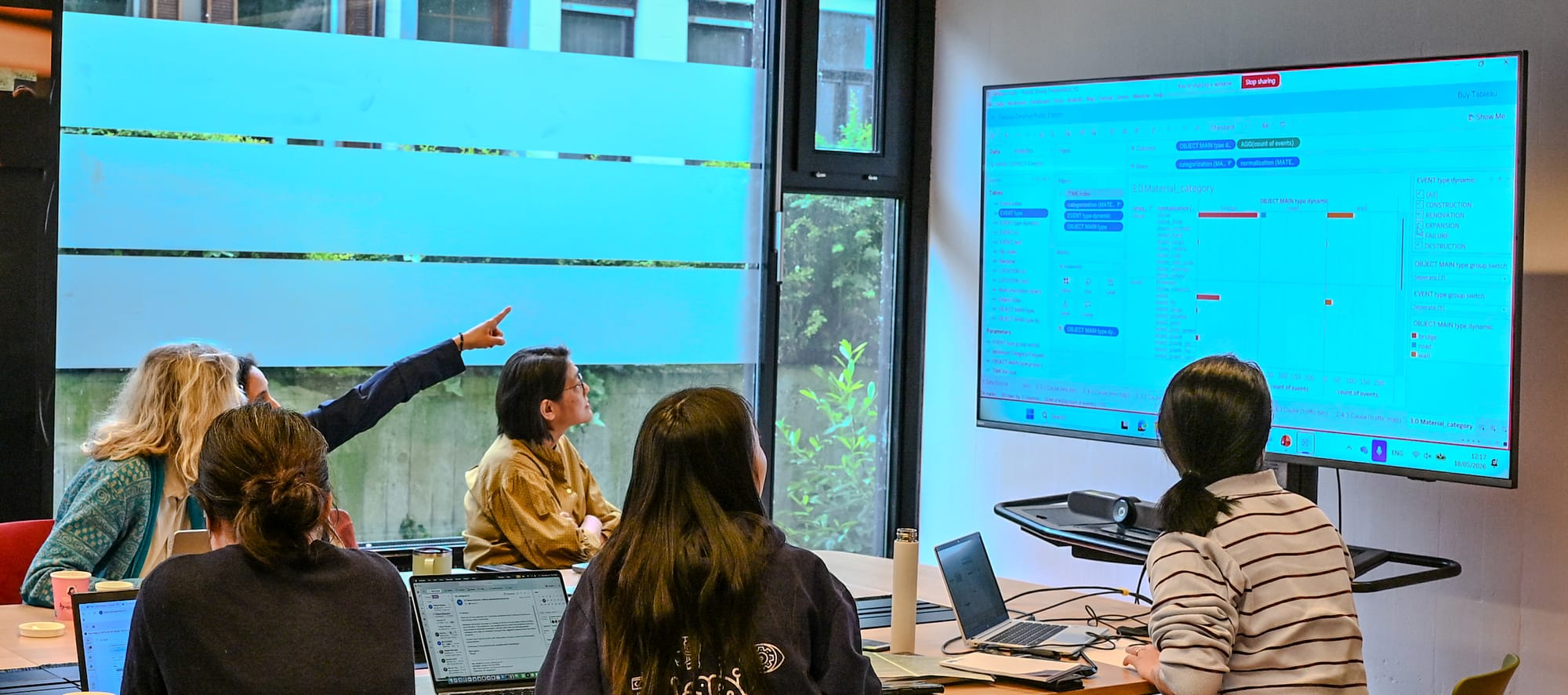
On 18 May, the opening sessions explored RegInfra data derived from textual and pictorial sources. The hosting RegInfra team structured their presentation into three parts: “From Sources to Structured Data,” “Infrastructure Events in Commemorative Inscriptions,” and “Infrastructure on Maps.” They traced the data journey from gazetteers to curated datasets, highlighting key analytical dimensions of events such as event causes, event materials, funding and labor origins, official and social actors, spatial analysis, the possibility of integration with external datasets, as well as the analytical dimensions of depicted infrastructure in gazetteer city maps, and the potential of integrating map and inscription data. In response, participants suggested using quantitative approaches to better explore data patterns, incorporating related research on gazetteer density, leveraging historical photographs and 3D modeling to estimate material expenditures, and cross-referencing inscriptions with other historical evidence. The session concluded with feedback on the project’s data potential and the interpretive consequences of source ecology.
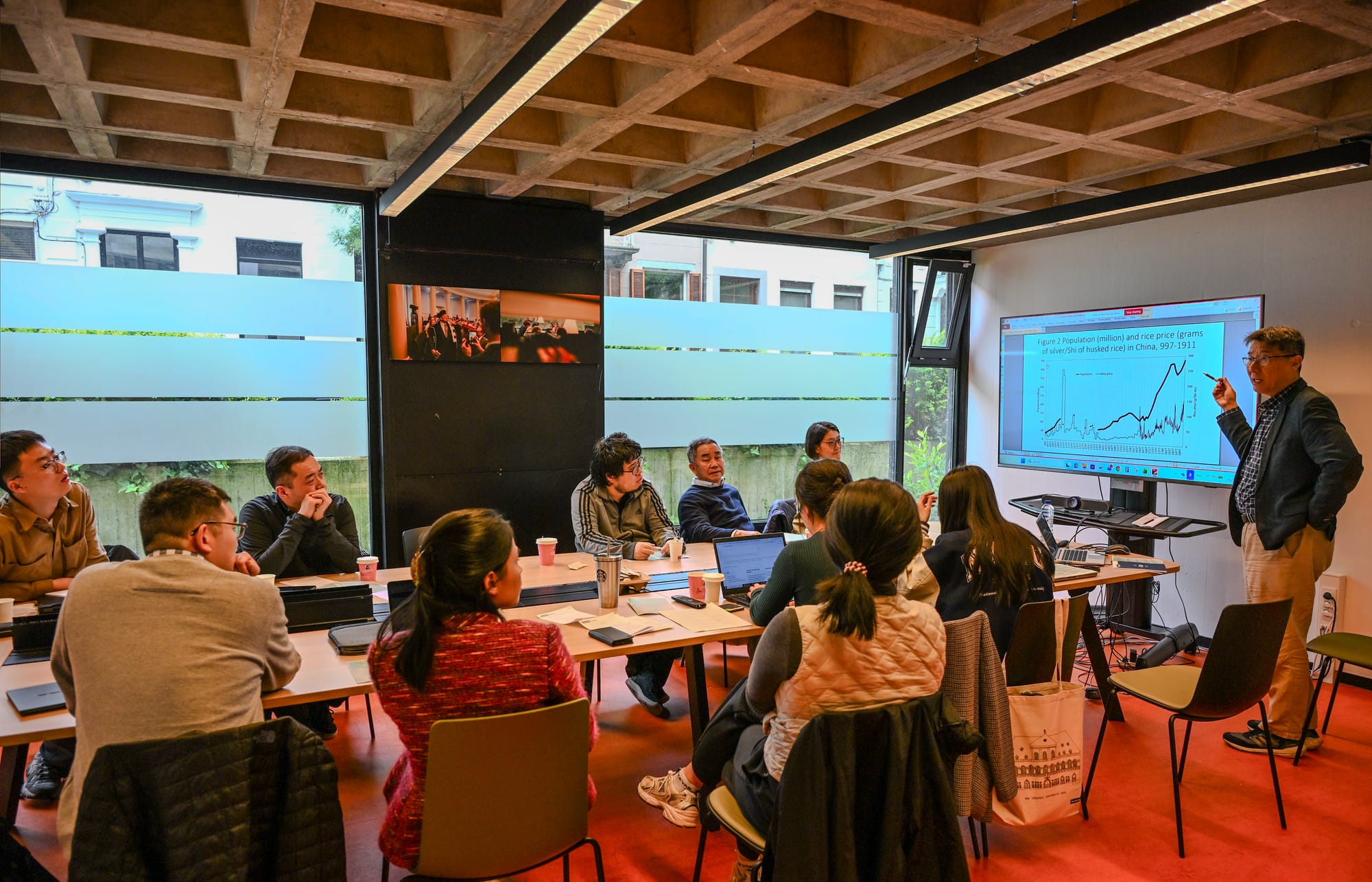
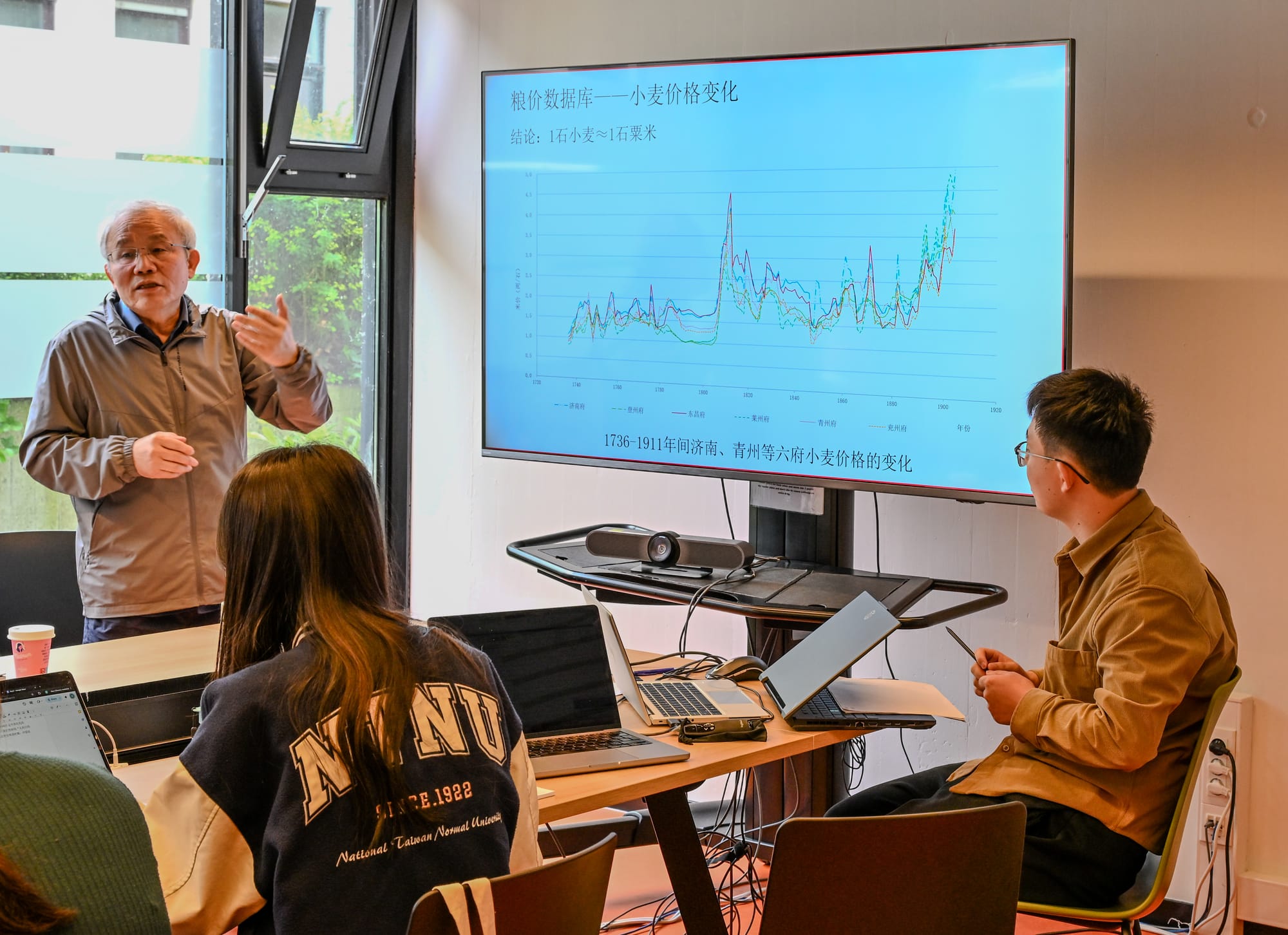
On 19 May, the focus shifted to fiscal, administrative, and property-related records. In his presentation, Peng Kaixiang (Wuhan University) examined common funds across local gazetteers, account books, and genealogies, drawing on primary sources to explore distinctions between temple and village public property, regional wage structures, commodity prices from urban workshops, and lineage-based mappings of public facilities. This prompted discussion of property regimes, labor mobilization, material costs, and the differing perspectives of administrative and lineage sources. Cao Shuji (University of Hong Kong) and Pang Yi (Xiamen University) introduced a thoroughly curated sub-county-level database on population, land, and taxes in Northern China (1368–1953). Their data revealed long-term shifts in taxation and corvée labor structures, offering a strong empirical foundation for other researchers to build upon. Ma Debin (Fudan University) presented three projects spanning macro to micro scales: a two-millennium reconstruction of Chinese central government fiscal revenue, a micro-level study of a nineteenth-century Shandong merchant firm’s account books, and research on late Qing to Republican monetary and banking systems. These prompted debates on regional currency variation, the interpretive challenges of historical account books, and the need for caution when drawing broad conclusions from limited data samples.
On 20 May, the workshop discussion moved toward climate, religion, maritime networks, and digital platforms. In his presentation on the history of climate and society, Pei Qing (Hong Kong Polytechnic University) analyzed the link between past climate changes and human history using various case studies drawn from social archives. He highlighted the research cycle from historical records and scale to analytical methods, which prompted a discussion on how to connect environmental records with social response, and how to handle missing or uneven data. Chen Zhiwu (University of Hong Kong) correlated prefecture-level typhoon data with the construction of Mazu temples, sparking discussion on whether building physical infrastructure actively facilitated the spread of belief, the role of temples in building long-term trust networks, and the precise relationship between environmental risk and local initiatives. Following this, Angela Schottenhammer and Mariana Sanchez (KU Leuven) presented their TRANSPACIFIC database, tracking 16th-century global knowledge and commodity transfers. This prompted methodological discussions on defining "events" in relational databases, disambiguating names to map agent networks, connecting digital queries back to primary sources like cargo lists, and the potential of using 3D modeling for ship architecture and comparing Pacific voyages with Atlantic maritime networks.
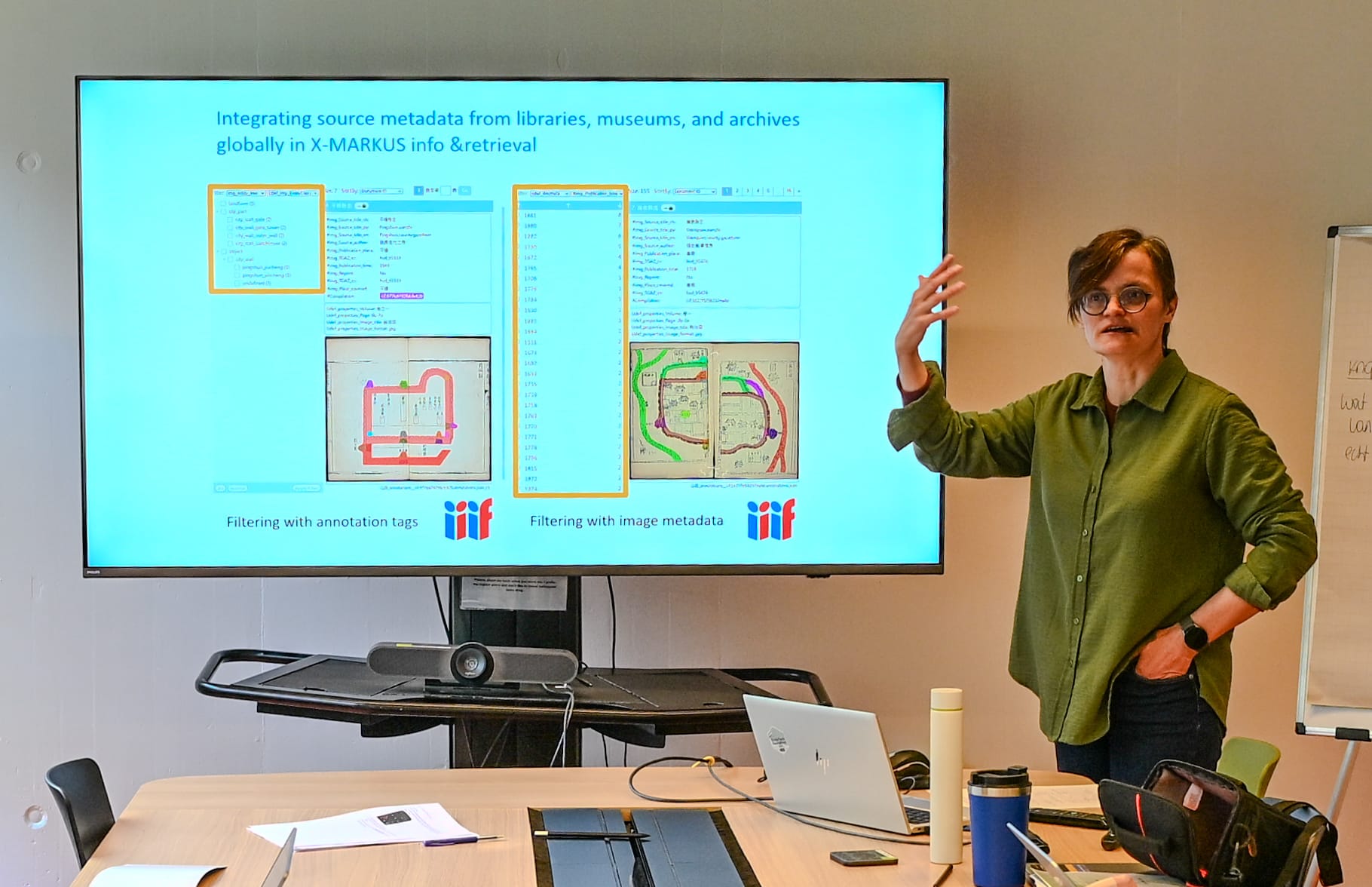
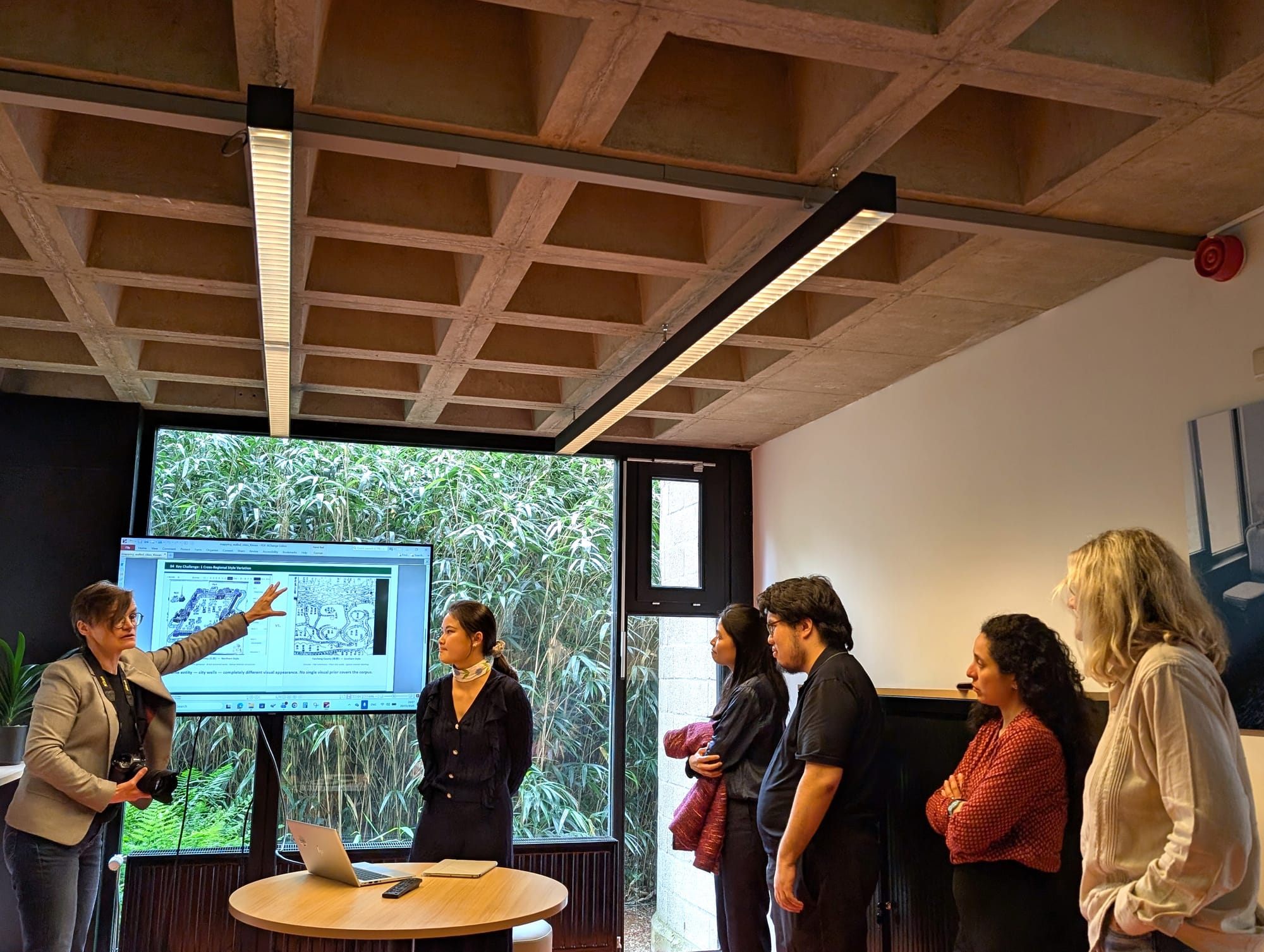
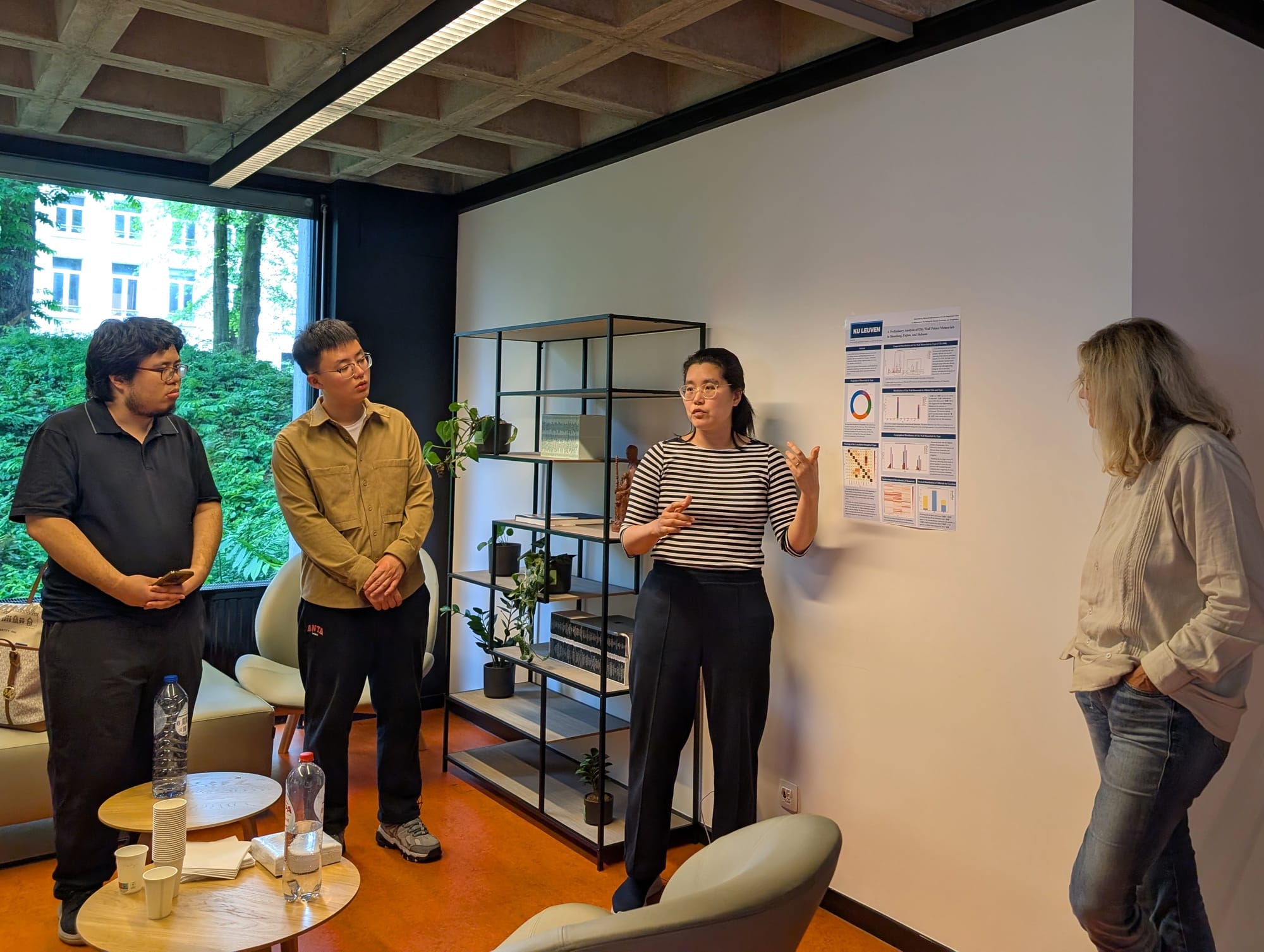
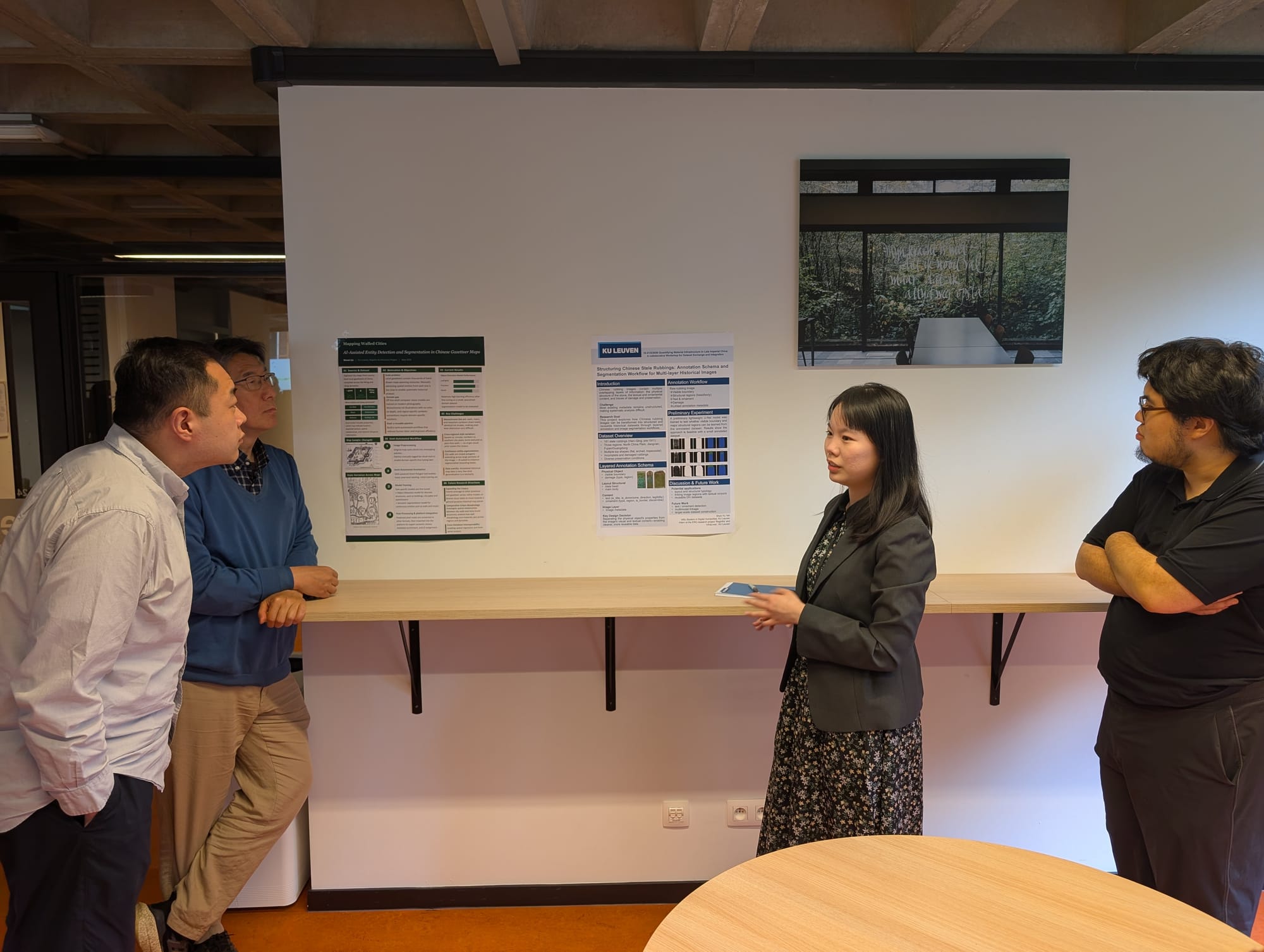
Following the presentations on 20 May, the interns from the KU Leuven Master of Digital Humanities program showcased their ongoing projects in collaboration with the RegInfra project. Shun-Yu Yeh introduced her poster on structuring Chinese stele rubbings through annotation and segmentation workflows, Xinran Liu presented her work on AI-assisted entity detection and segmentation in Chinese gazetteer maps, and Guo Yating (absent but represented by Lee Sunkyu) presented a preliminary analysis of city wall related palace memorials in Shandong, Fujian, and Sichuan. These projects not only opened up dialogue with RegInfra data at both the source and methodological levels, but also highlighted possibilities for collaboration with datasets presented in other sessions.
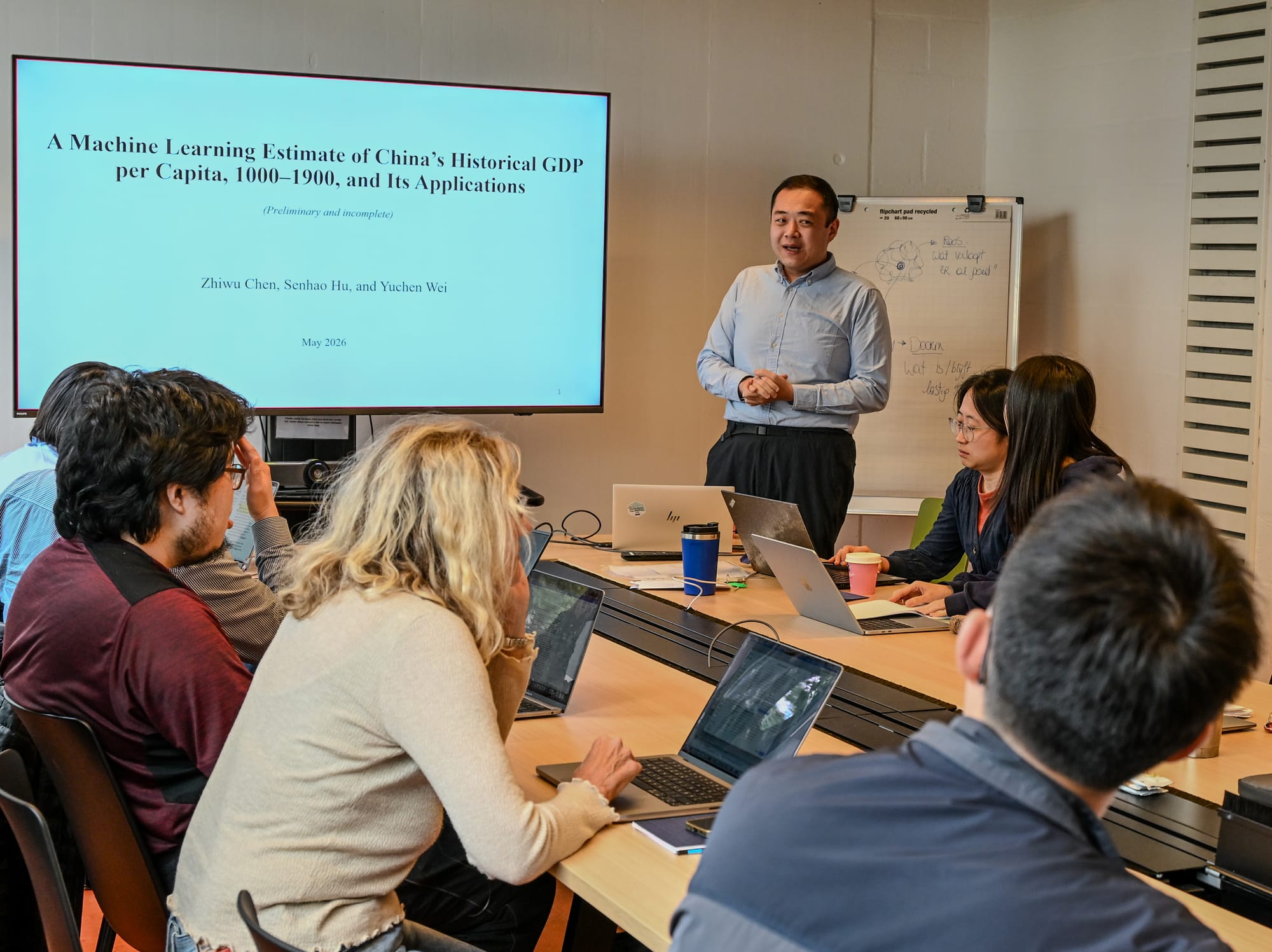
In the sessions on 21 May, Hu Heng (Renmin University of China) presented the development and progress of the Qing Dynasty Geographic Information System. He introduced how the team addressed challenges in verifying county borders, organizing different sources into a consistent data system, and using multimodal models to handle place names in historical maps. His presentation also prompted discussion on the methodological difficulties of integrating multi-source data to link location and person identifiers. Hu Senhao (University of Hong Kong) then introduced a machine-learning approach to estimate historical GDP per capita, combining existing GDP estimates from limited locations with a systematic large-scale dataset (CBDB) as training data. By applying a stacked ensemble learning approach to prefecture-level data, the model raised important questions about feature selection, the use of other socioeconomic data as validation proxies, and the risks of overinterpreting small or already correlated datasets. The discussion also touched on the practical challenge of linking economic data with infrastructure datasets and on the need to frame hypotheses that stay grounded in the limits of the surviving record.
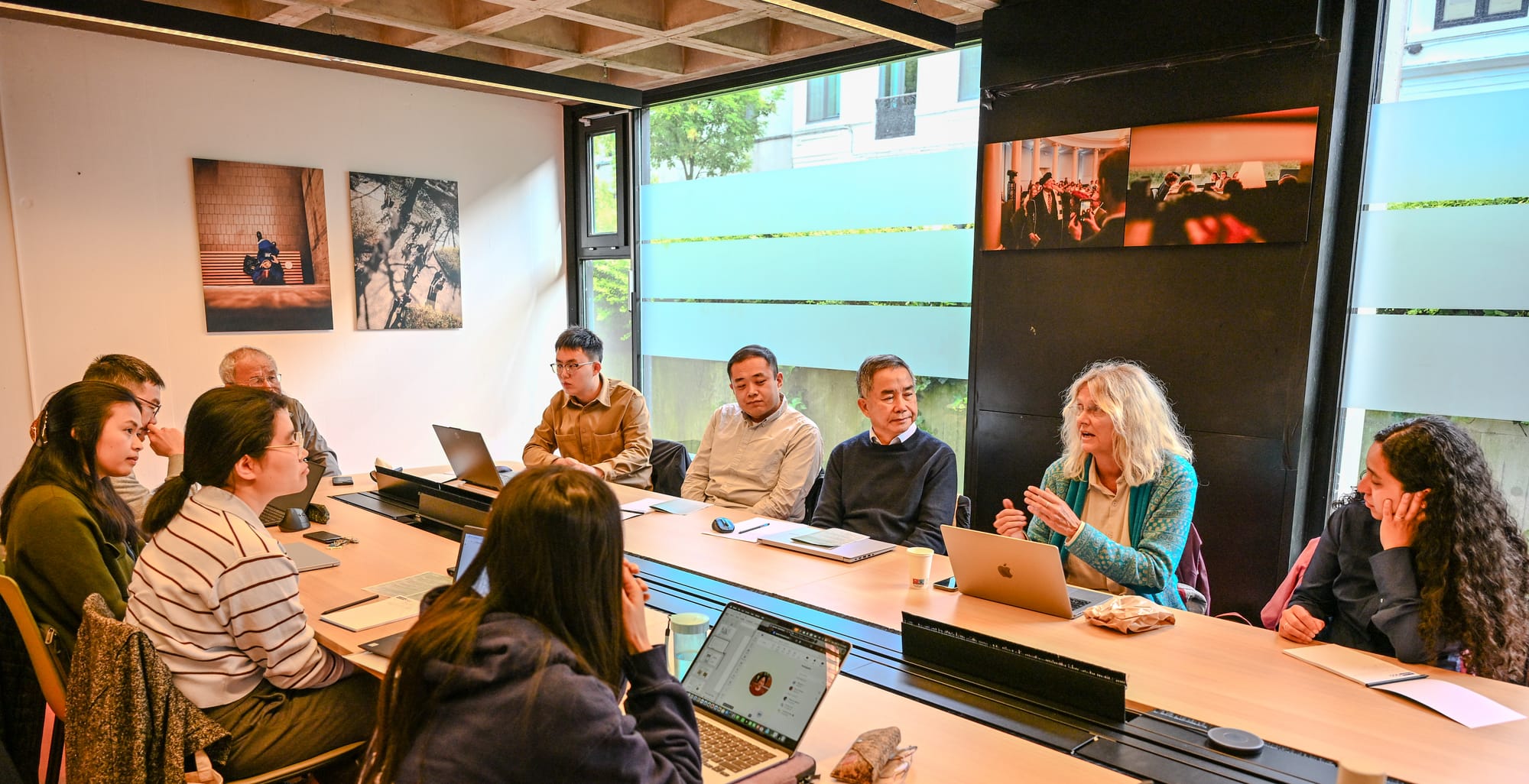
The final round table focused on plans for next steps and potential collaborations. Participants discussed practical ways to integrate prefecture level economic indicators, such as urbanization rates and guild hall records, with infrastructure datasets, to track regional development trajectories. To navigate the scarcity of continuous historical data, scholars suggested establishing key year benchmarks that capture major historical shifts. The conversation also highlighted the need to align differing trade classifications and utilize knowledge graphs to connect distinct digital spheres. Drawing on examples like global height databases, the exchanges underscored that successful quantitative research requires historians and economists to work closely together to build hypotheses firmly grounded in a deep reading of original materials.
Taken together, the workshop explored how diverse historical sources, from inscriptions and genealogies to climate records and macroeconomic estimates, can be brought into dialogue without flattening their differences. A recurring concern was how to move from source-specific observations to comparable structured data while remaining attentive to scale, regional variation, source bias, disambiguation, and differing definitions of events. The exchanges helped clarify shared questions and opened up potential collaboration on cross-referencing sources, linking datasets, and comparative research.
Program